The fleet and merchant portals
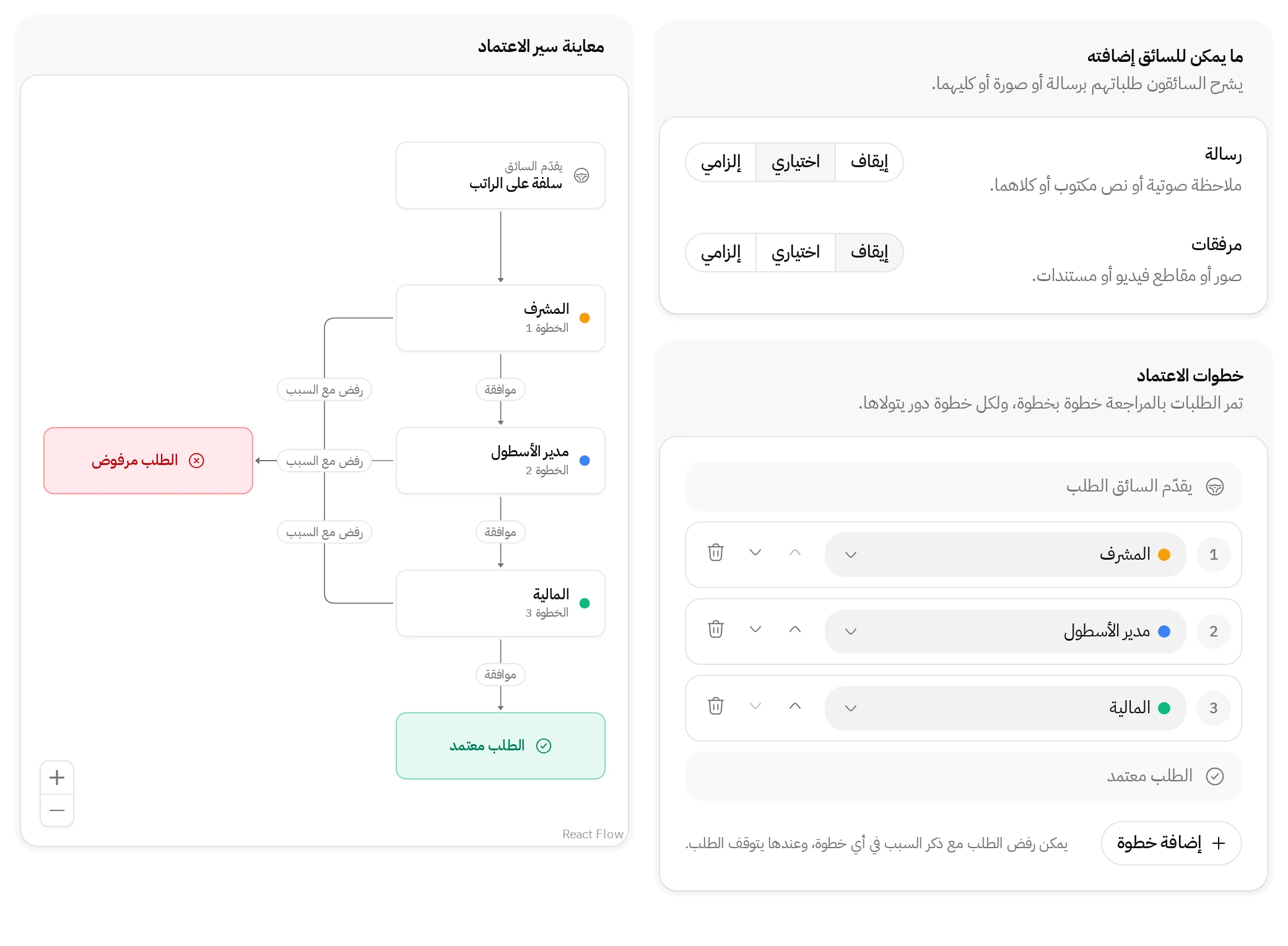
Logibytes is a logistics software company in Saudi Arabia. I'm a frontend developer there, and I built two of its web apps from scratch, the fleet portal and the merchant portal. Both work in Arabic and English, and the whole layout flips to right to left in Arabic.
The fleet portal
A company that runs its own delivery trucks has a lot to keep track of. It needs to know who its drivers are, which truck each one drives, whether the trucks pass their inspections, and where they are right now. The fleet portal is where the office team does all of that. I built it on my own, and it's in use.
- Drivers and vehicles. The team adds drivers and trucks and assigns a driver to each truck. The forms check things like VINs and ID numbers, and warn when a licence or registration is about to expire.
- Inspections. Drivers inspect their trucks from the drivers' app and send photos. The portal shows every inspection, flags the late ones, and shows how well each truck has kept up over time.
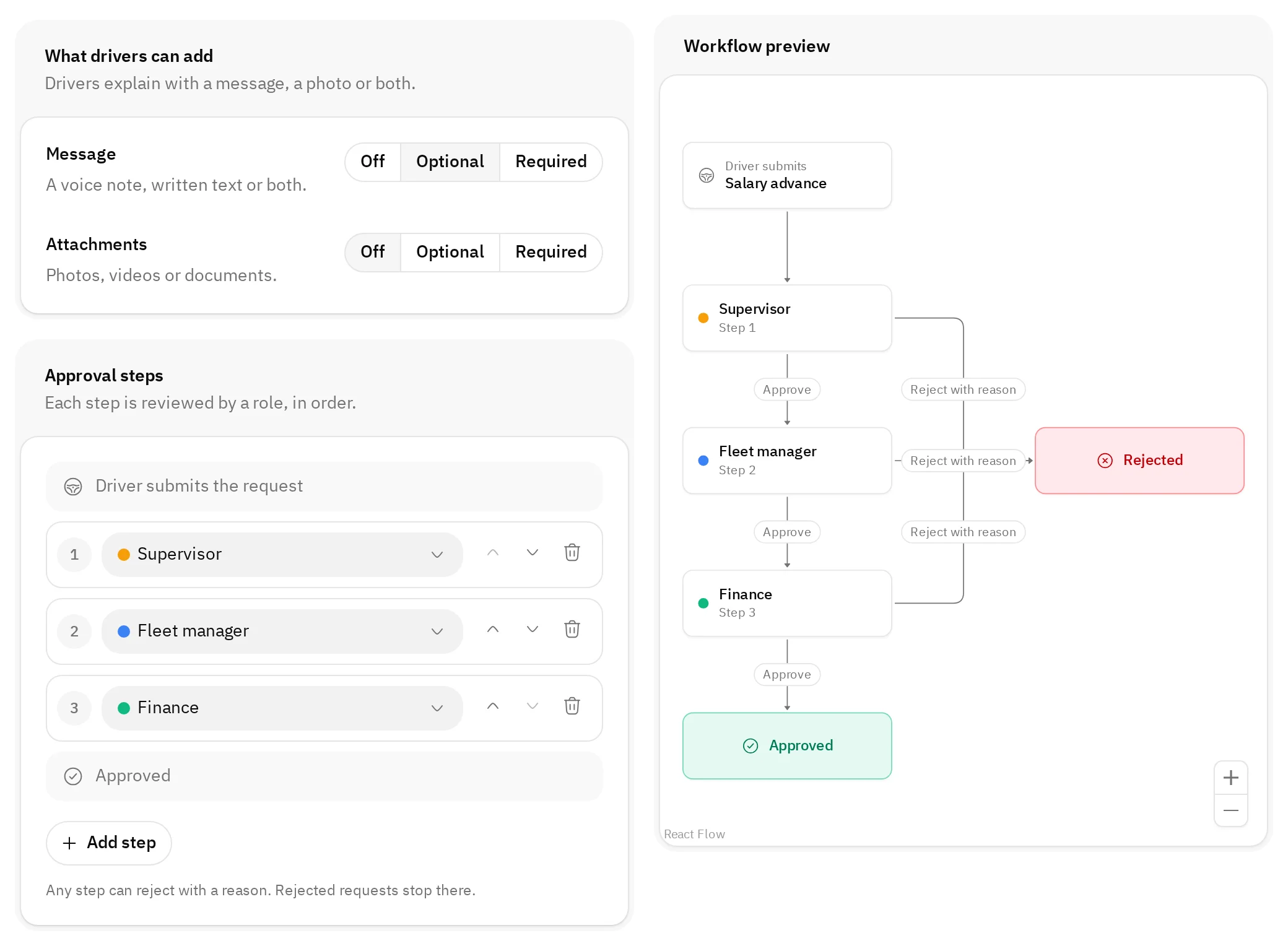
- Driver requests. Drivers ask for things through the app, like a day off, a loan or fuel. Admins decide who approves each kind of request and in what order, for example a supervisor and then finance. Next to those steps there's a diagram of where a request goes, which redraws as they edit. Whoever's turn it is can approve the request or reject it with a reason. Drivers see each kind of request in their own language, which can be Arabic, English, Urdu, Hindi, Nepali or Twi.
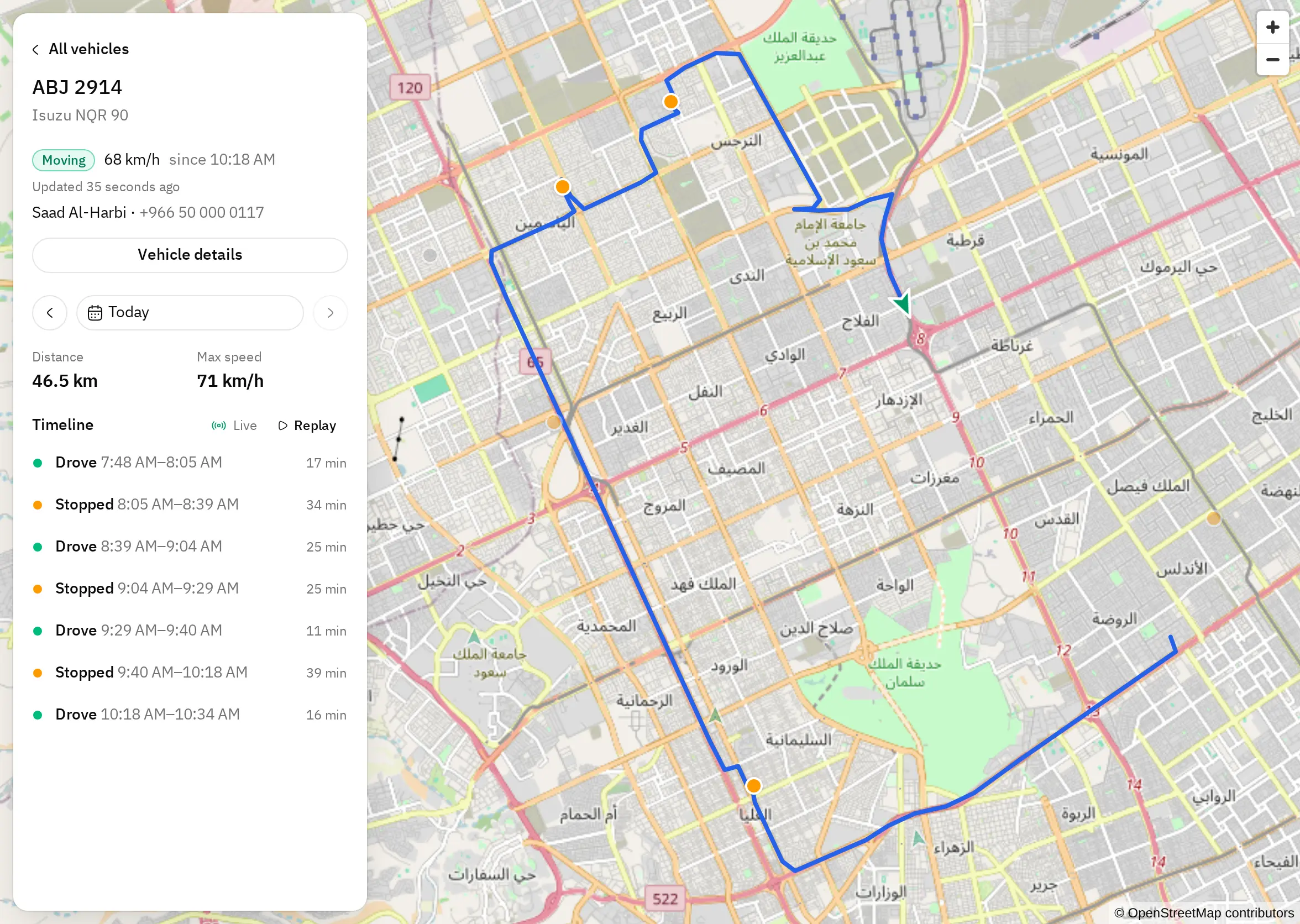
- A live map. Every truck is on one map. Clicking a truck zooms into it and lays out its day as drives and stops, and you can replay the day.
The merchant portal
When an online store sells something, it has to get the order to the customer. The merchant portal is the website where a store sends its orders out for delivery.
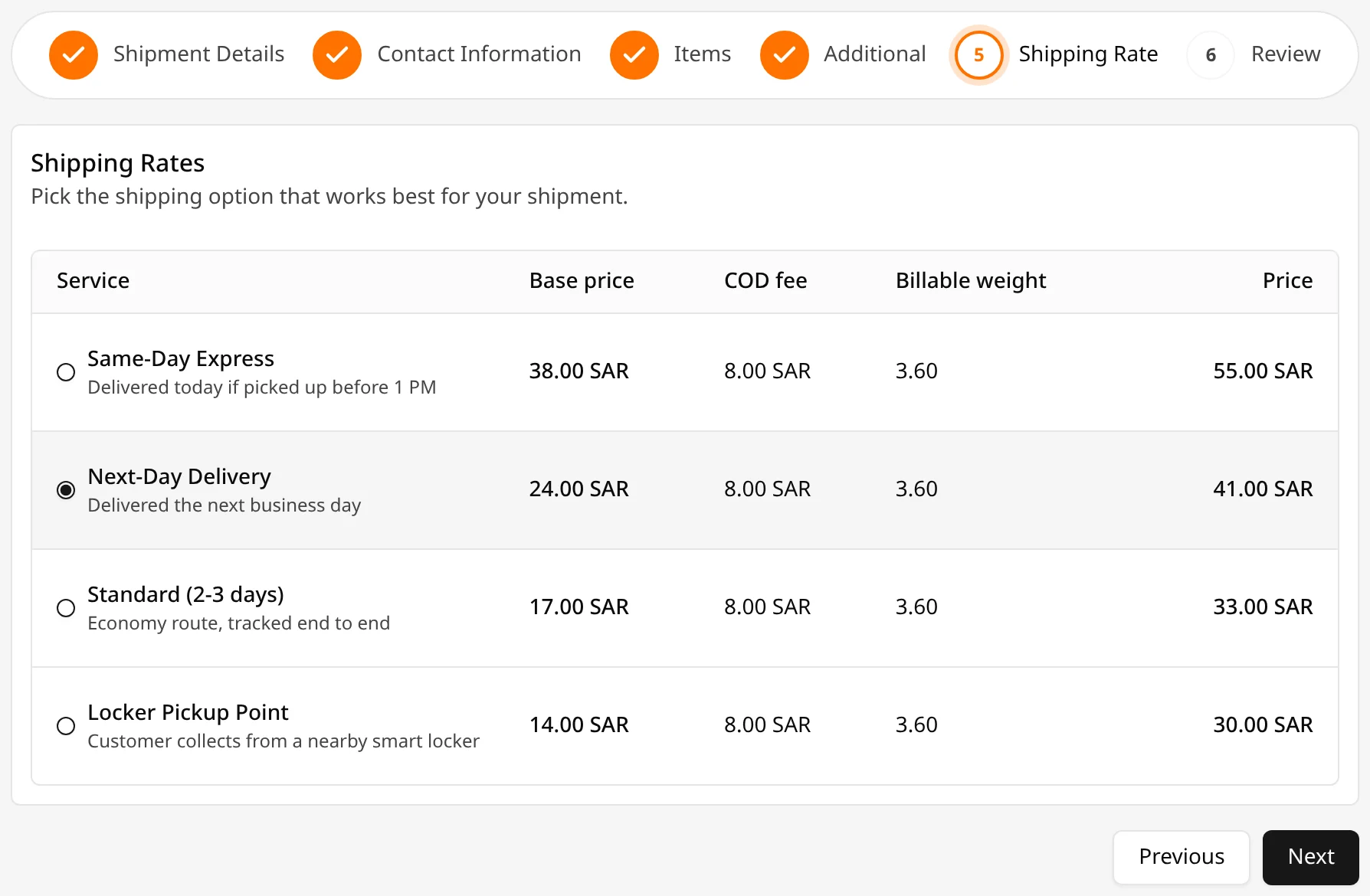
- Creating a shipment. A six-step form takes the parcel's details, the pickup and delivery addresses on a map, and the item list. Then it shows the shipping prices to choose from.
- Connecting a store. A store on Zid or Salla, two Saudi store builders, can connect it to the portal.
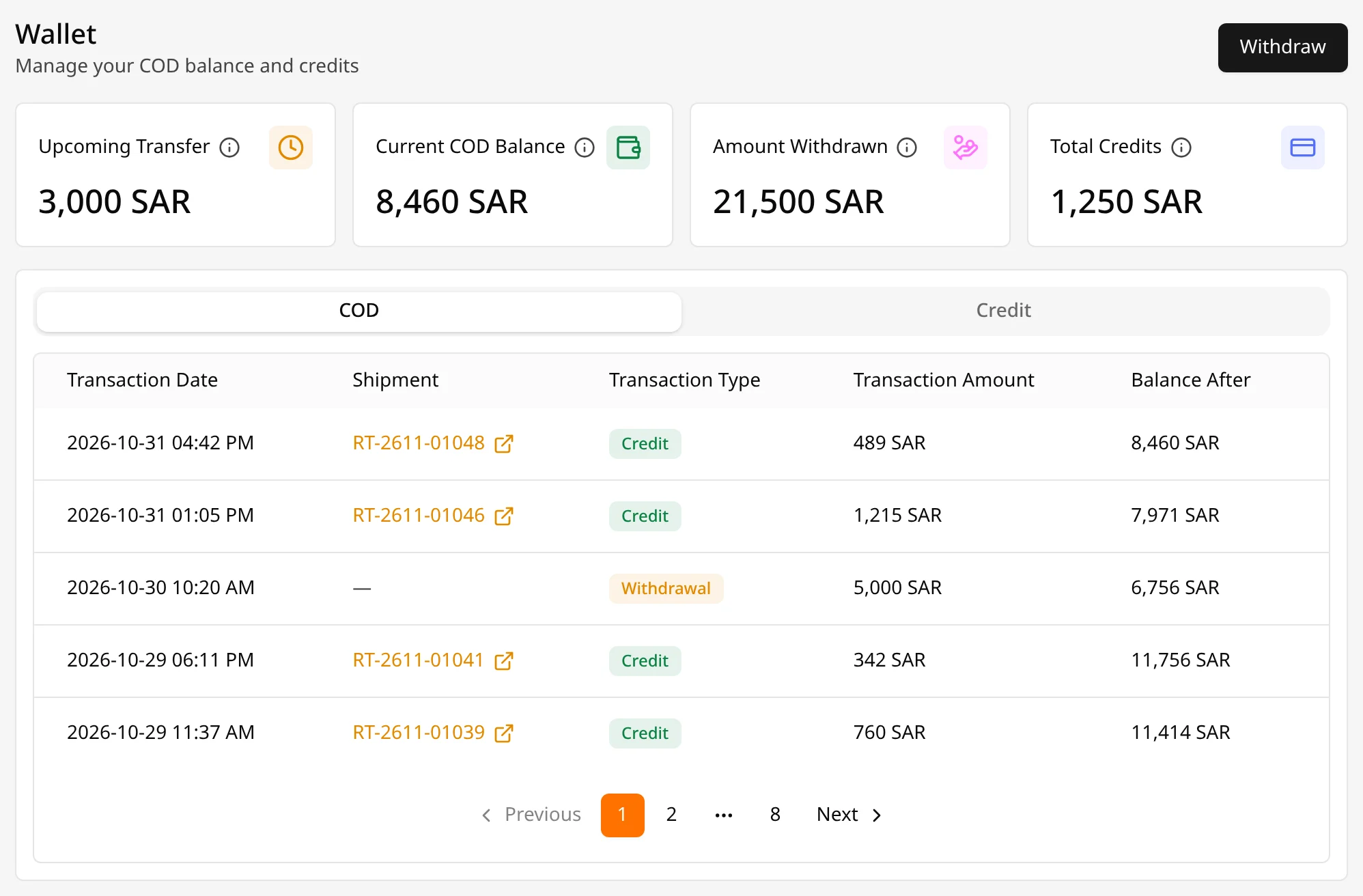
- The wallet. The store tops up credit, and sees the cash its customers paid the driver on delivery. It can ask to withdraw that cash to its bank account.
- Managing shipments. The store sees all its shipments, filters them by status, and can edit or cancel one.
I also worked on the operator portal, which the delivery team itself uses. That was mostly fixes and new modules, like a reports builder.
Stack. React, Vite, React Router, TanStack Query and Table, React Hook Form with Zod, Tailwind with shadcn/ui, i18next, React Flow, and MapLibre for the map.
Link. logibytes.sa